
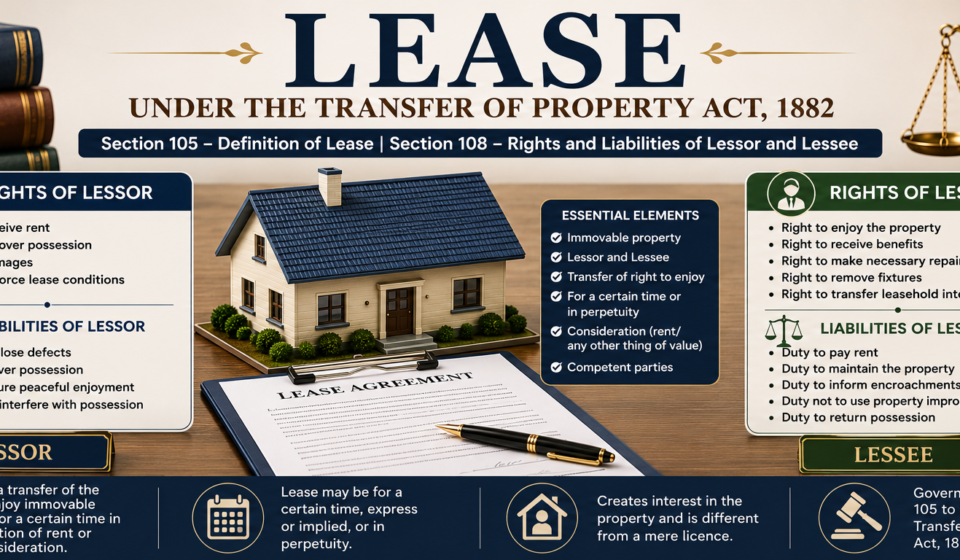
Define Lease. Explain the Rights and Liabilities of Lessor and Lessee
Section 105, 108 of the Transfer of Property Act, 1882
Introduction
A Lease is one of the most common modes of transferring an interest in immovable property. It enables a person to enjoy another’s property for a specified period in return for rent or other consideration. The law relating to leases is contained in Sections 105 to 117 of the Transfer of Property Act, 1882.
For KSLU LLB examinations, questions relating to the definition, rights, and liabilities of lessor and lessee are frequently asked for 10, 16, and 20 marks.
Definition of Lease
Section 105 – Transfer of Property Act, 1882
According to Section 105:
“A lease of immovable property is a transfer of a right to enjoy such property, made for a certain time, express or implied, or in perpetuity, in consideration of a price paid or promised, or of money, a share of crops, service or any other thing of value, to be rendered periodically or on specified occasions to the transferor.”
Simple Meaning
A lease is a legal transfer of the right to enjoy an immovable property for a fixed or indefinite period in exchange for rent or any other agreed consideration.
Essential Elements of Lease
A valid lease must contain the following elements:
- There must be immovable property.
- There must be a lessor (owner of the property).
- There must be a lessee (person taking the property on lease).
- There must be a transfer of the right to enjoy the property.
- The lease must be for a specified period or in perpetuity.
- There must be consideration (rent, premium, share of crops, services, etc.).
- The parties must be competent to contract.
Parties to a Lease
1. Lessor
The owner who grants the lease.
2. Lessee
The person who obtains the right to enjoy the property.
Rights and Liabilities of Lessor and Lessee
Section 108 – Transfer of Property Act, 1882
Section 108 lays down the mutual rights and obligations of both parties.
Rights of the Lessor
1. Right to Receive Rent
The lessor has the right to receive rent as agreed in the lease.
2. Right to Recover Possession
After expiry or lawful termination of the lease, the lessor is entitled to recover possession of the property.
3. Right to Damages
The lessor may claim damages if the lessee causes unnecessary damage to the property.
4. Right to Enforce Lease Conditions
The lessor may enforce all conditions contained in the lease agreement.
Liabilities (Duties) of the Lessor
1. Duty to Disclose Material Defects
The lessor must disclose any latent defects in the property known to him which the lessee cannot discover through ordinary care.
2. Duty to Deliver Possession
The lessor must place the lessee in possession of the property.
3. Duty to Ensure Peaceful Enjoyment
The lessor must not interfere with the lessee’s lawful possession and enjoyment during the lease period.
Rights of the Lessee
1. Right to Enjoy the Property
The lessee has the right to peaceful possession during the lease.
2. Right to Receive Benefits
The lessee may enjoy all natural benefits arising from the property, unless otherwise agreed.
3. Right to Make Necessary Repairs
If the lessor fails to make repairs after notice, the lessee may make them and recover the reasonable expenses from the lessor.
4. Right to Remove Fixtures
The lessee may remove fixtures installed by him before surrendering possession, provided no substantial damage is caused.
5. Right to Transfer Leasehold Interest
Unless restricted by the contract, the lessee may assign or sub-lease his interest.
Liabilities (Duties) of the Lessee
1. Duty to Pay Rent
The lessee must pay rent on time as agreed.
2. Duty to Maintain the Property
The lessee must take reasonable care of the property.
3. Duty to Inform Encroachments
The lessee must inform the lessor of any encroachment or interference by third parties.
4. Duty Not to Use Property Improperly
The lessee must not commit waste or use the property for unlawful purposes.
5. Duty to Return Possession
On termination of the lease, the lessee must restore possession to the lessor.
Important Sections Related to Lease
| Section | Subject |
|---|---|
| Section 105 | Definition of Lease |
| Section 106 | Duration of Certain Leases |
| Section 107 | How Leases are Made |
| Section 108 | Rights and Liabilities of Lessor and Lessee |
| Section 109 | Rights of Lessor’s Transferee |
| Section 111 | Determination of Lease |
| Section 112 | Waiver of Forfeiture |
| Section 116 | Holding Over |
| Section 117 | Exemption of Agricultural Leases |
Landmark Case Laws
1. Associated Hotels of India Ltd. v. R.N. Kapoor (1959)
Principle:
The Supreme Court distinguished a lease from a licence. Exclusive possession is a strong indicator of a lease, though the intention of the parties remains decisive.
2. Qudrat Ullah v. Municipal Board, Bareilly (1974)
Principle:
A lease creates an interest in immovable property, whereas a licence merely grants permission to use property without transferring any interest.
3. Anthony v. K.C. Ittoop & Sons (2000)
Principle:
Even if a lease deed requiring registration is unregistered, the lessee may, in certain circumstances, be treated as a tenant from month to month under Section 106, depending on the facts.
Difference Between Lease and Licence
| Lease | Licence |
|---|---|
| Creates an interest in property | Does not create any interest |
| Governed by the Transfer of Property Act | Governed by the Indian Easements Act |
| Exclusive possession is generally granted | Mere permission to use property |
| Transferable unless restricted | Usually personal and non-transferable |
Examination Tips for KSLU Students
For a 16-mark answer, write in this order:
- Introduction
- Definition under Section 105
- Essential Elements of Lease
- Rights of Lessor
- Liabilities of Lessor
- Rights of Lessee
- Liabilities of Lessee
- Important Sections
- Landmark Case Laws
- Conclusion
Including Section numbers and case laws will help you score better.
Conclusion
A lease is a transfer of the right to enjoy immovable property for a specified period in return for consideration. Sections 105 to 117 of the Transfer of Property Act, 1882 comprehensively regulate leases, while Section 108 specifically lays down the mutual rights and liabilities of the lessor and lessee. A clear understanding of these provisions ensures fairness in landlord-tenant relationships and is essential for both legal practice and KSLU examinations.
Frequently Asked Questions (FAQs)
1. Which section defines Lease?
Section 105 of the Transfer of Property Act, 1882.
2. Which section explains the rights and liabilities of the lessor and lessee?
Section 108 of the Transfer of Property Act, 1882.
3. What is the difference between a lease and a licence?
A lease transfers an interest in immovable property, whereas a licence only grants permission to use the property without creating any legal interest.
4. Can a lessee transfer his leasehold interest?
Yes. Under Section 108(j), unless there is a contract to the contrary, a lessee may transfer or sub-lease his interest.
5. Which Supreme Court case distinguishes a lease from a licence?
Associated Hotels of India Ltd. v. R.N. Kapoor (1959).